
Last updated November 17, 2026
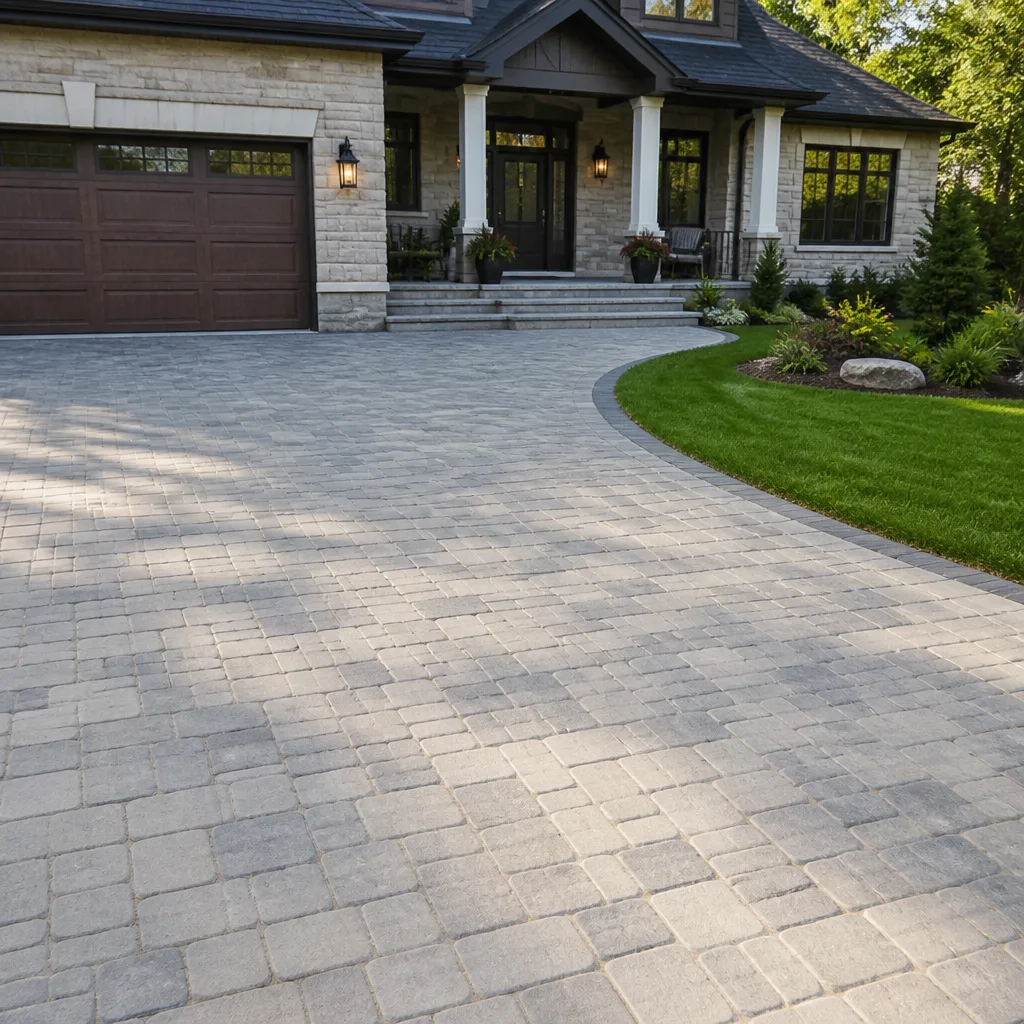 Driveway & pavers
 Kitchen remodeling
 Bathroom remodeling
 Home additions & ADU
 Roofing
 Windows & doors
 Fence
Free written scope consultation - allowances, timeline, and change-order rules on paper before a single trade is scheduled
The Complete Driveway & Pavers Guide for Torrance Homeowners
Most Torrance homeowners pick a paver style before they know whether their existing sub-base can support it. That sequencing mistake alone accounts for the majority of paver failures within three years. A driveway is a structural system carrying vehicles, water, and the weight of everything that rolls onto it, and the paver on top is just the visible layer of that system. What’s below the surface decides whether the surface stays flat. This guide covers what actually matters in Torrance: soil conditions, base compaction, drainage, impervious surface limits, HOA rules, and the real structural and maintenance differences between interlocking concrete, natural stone, and porcelain pavers. You’ll learn how to evaluate a sub-base before demolition starts, how to read a quote, and how to pick a paver that holds up.
Quick Answer
A driveway paver project in Torrance is a base-first, drainage-driven build: success depends on excavating to the right depth, compacting aggregate base in lifts, and getting water off and away from the slab before any paver is set. Paver choice comes last, after the sub-base is evaluated and the impervious-surface and HOA questions are answered. Interlocking concrete pavers from Belgard, Techo-Bloc, or Unilock are the most common pick for local driveways; natural stone and porcelain are the premium alternatives with different maintenance realities.
Styles & brands we work with
- Kitchen remodeling
- Bathroom remodeling
- Home additions & ADU
- Roofing
- Windows & doors
- Driveway & pavers
- Fence
Table of Contents
- Why Torrance’s Clay-Heavy Soil Changes the Base Spec
- Interlocking Concrete vs. Natural Stone vs. Porcelain Pavers
- How to Evaluate Your Existing Sub-Base Before Demo Day
- HOA and City of Torrance Permitting Rules for Driveway Replacement
- Drainage, Impervious Surfaces, and Where the Water Goes
- What Driveway Pavers Cost in Torrance by Price Tier
- How a Paver Driveway Is Actually Installed, Step by Step
- Material and Brand Options at Each Price Tier
Why Torrance’s Clay-Heavy Soil Changes the Base Spec
Torrance sits on soils with a heavy clay component, and that single fact drives most of the base spec on a driveway here. Clay expands slightly when it takes on water and contracts as it dries. It also holds water rather than shedding it. A base built to an inland Southern California standard, where soil drains faster and moves less, can fail in Torrance even if every paver is laid perfectly. The pavers don’t crack; the plane they sit on loses flatness, joints open, and water starts pooling in exactly the places you don’t want it.
What changes in practice:
- Base depth increases. A clay subgrade needs a thicker, well-compacted aggregate base to spread vehicle loads before they reach the soil. A thin base that works elsewhere is a liability here.
- Compaction happens in lifts. Aggregate placed in one deep pass won’t compact to spec. It goes down in layers, each compacted before the next is added, with density checks.
- Edge restraint is structural, not cosmetic. On clay, an unrestrained edge lets the base migrate outward over time. Concrete or heavy-duty edge restraint is what holds the system together.
- Subgrade prep includes moisture conditioning. Clay needs to be worked at the right moisture content so it compacts rather than pumping. This is a step cheap installs skip.
Heavy winter rains are the other half of the equation. Torrance gets concentrated rain events, and a driveway that sheds water poorly the rest of the year becomes obvious when a storm dumps rain in a few hours. Any paver system here needs to move that volume off the surface and away from the house, into a defined path. If you’re also rethinking the rest of your hardscape, our team handles the full driveway & pavers scope along with fencing and drainage in one project, which keeps those two systems coordinated instead of fighting each other.
Interlocking Concrete vs. Natural Stone vs. Porcelain Pavers
The structural difference between paver types shows up in how each one handles load, movement, and maintenance. Aesthetically they can look almost identical from the street. Structurally they behave very differently, and the long-term maintenance cost gap is wider than the initial price gap.
Interlocking Concrete Pavers
The default for a reason. Concrete pavers interlock through a joint sand system, transferring vehicle load across the whole surface rather than concentrating it under a single tire. They handle the clay-soil movement in Torrance with more tolerance than rigid surfaces. Individual units can be lifted and reset if a base issue appears. Brands like Belgard, Techo-Bloc, Unilock, Tremron, and Cambridge manufacture these systems specifically for load-bearing driveways, not decorative patios. Maintenance is a periodic re-sanding of joints and an occasional wash. They are the best value tier for most Torrance driveways.
Natural Stone Pavers
Natural stone, whether travertine, limestone, or granite, is a premium upgrade with a different maintenance profile. The stone itself is very durable and holds up to traffic. The joints are the weak point. Stone is set on a base with a bedding layer, and the joints must be filled and refilled over time. Some stone surfaces need sealing every few years. Stone is heavier than concrete pavers, which puts a slightly different demand on the base. If the base under stone is done right, it lasts a long time. If it isn’t, the stone doesn’t flex like concrete pavers and will crack or rock instead. Natural stone is the choice for homeowners who want a look no concrete paver can fully replicate and who are willing to stay on top of joint maintenance.
Porcelain Pavers
Porcelain pavers are the newer premium option and the most misread. Porcelain is dense and highly water-resistant, which makes it appealing in a rainy climate. For a driveway, though, the product specification matters: not all porcelain pavers are rated for vehicular load. The ones that aren’t will crack under a car. The ones that are, set on an appropriate base, perform well and need very little maintenance. Porcelain also resists staining and fading better than concrete pavers. The trade-off is cost and the need for a contractor who has actually installed load-rated porcelain over a clay base, because the installation method differs from standard interlocking concrete.
How to Evaluate Your Existing Sub-Base Before Demo Day
This is the step that separates a driveway that lasts twenty years from one that starts settling in three. It has to happen before any pavers are ordered and before demolition begins. The contract should say so in writing.
What a contractor should be doing in the pre-demo stage:
- Walk the existing surface and map the failure modes. Cracks, settled areas, ponding spots, and root intrusion each point to a different underlying problem. A settled corner means water is getting under the edge. A center crack can mean the subgrade never compacted.
- Look at the base through a test excavation. Someone needs to dig a small pit to see what’s actually under the old surface: the depth of base material, its condition, and the nature of the native soil beneath it. Guessing from the surface is not evaluation.
- Confirm the native soil type. “Clay-heavy” is the starting assumption in Torrance, but confirming the actual condition at your property, including drainage behavior, sets the base depth and treatment.
- Check the drainage path. Where does water go now, and where should it go? The sub-base design is partly a drainage design.
- Verify the edge conditions. How was the existing edge restrained, and is the new edge going to be held correctly?
- Identify utilities and irrigation. Sprinkler lines, drainage lines, and utility runs under the driveway need to be located and protected before excavation.
Any contractor who quotes a paver driveway without this evaluation happens to be quoting a number, not a project. That number changes the moment the first shovel hits clay. Ask for the evaluation in writing, and ask what happens to the price if the sub-base turns out to be worse than expected. A contractor who’s done the work will answer that without flinching.
HOA and City of Torrance Permitting Rules for Driveway Replacement
Driveway replacement runs into two layers of rules in Torrance: the city’s permitting requirements and, if you’re in an HOA, the association’s architectural-review rules. Both can change your design, and both are easier to handle before the design is final.
City of Torrance Requirements
- Permits. Most cities require a permit for a driveway replacement that modifies the sub-base or changes the footprint, so confirm your specific scope with Torrance’s building department before work begins. Ask which permit class applies to your scope and what inspections are required.
- Impervious surface limits. Many cities limit how much of a lot can be covered by impervious surfaces. A paver driveway with sand joints or a permeable joint system may be counted differently from a poured slab, but the rules are specific. Get the answer from the city in writing, not from the contractor’s opinion. If the driveway design affects your impervious area, the design has to account for it.
- Right-of-way and aprons. Where the driveway meets the street, the apron and any sidewalk crossing may be under city jurisdiction and subject to their standards for materials and transitions.
- Drainage discharge. The city will care that water from your driveway doesn’t discharge onto a neighboring property or into the street in a way that causes a problem. This is part of the permit review, not an afterthought.
HOA Requirements in Torrance
- Architectural review. Many HOAs require pre-approval of material, color, pattern, and visible edges. Some restrict paver style or the width of visible border courses.
- Material restrictions. An HOA may require a specific paver color family or prohibit certain finishes. Get the approved list before you fall in love with a color.
- Timelines. HOA review takes time. Budget for it in the project schedule or it becomes the reason the project stalls after demolition, which is the worst possible time.
Both layers are manageable if they’re handled early. If you’re also planning a larger exterior project, such as adding a new structure or a detached unit with its own driveway access, the coordination between the home additions & ADU scope and the driveway scope matters. The new access point, grading, and drainage have to be designed together, not in sequence.
Drainage, Impervious Surfaces, and Where the Water Goes
Drainage is the part of a driveway design that gets the least attention and causes the most expensive failures. Water is the enemy of every base, and a paver driveway that pools or sheds toward the house is a problem no amount of joint sand will fix.
What a proper drainage design accounts for:
- Surface slope. The driveway needs a defined slope, typically away from the house and toward a discharge point. The minimum slope depends on the material, the joint type, and whether the surface is intended to be permeable.
- Permeable vs. impermeable joints. Polymeric sand joints are largely impermeable and shed most water across the surface. Open-joint or permeable systems let water through to a designed base reservoir. The drainage design follows the choice, not the other way around.
- Edge drainage. Water that reaches the edge of a driveway without a path away will undermine the edge restraint. Channel drains, French drains, or a graded edge all serve this purpose depending on site conditions.
- Connection to the rest of the property. A driveway doesn’t drain in isolation. Water from the driveway, the yard, and the roof all end up in the same place, and the design has to account for the total.
This is one reason to think about the driveway and the surrounding property as one project. A new fence with a solid footing can block a drainage path; a fence installed after the driveway can be placed to support it. Our fence installation work is routinely planned at the same time as hardscape so the drainage path and the fence line are designed together rather than fighting each other.
What Driveway Pavers Cost in Torrance by Price Tier
Cost depends on square footage, paver type, base conditions, and access. The honest way to read a driveway paver budget is by price tier, because the tier you choose sets both the initial cost and the maintenance cost over the life of the driveway. These are typical estimates; the written estimate is the final price.
| Tier | Material | Typical Estimated Cost | Notes |
|---|---|---|---|
| Value | Standard interlocking concrete pavers | Lower end of the range | Belgard, Tremron, Cambridge systems. Full base replacement assumed. |
| Mid | Premium concrete pavers, patterned systems | Middle of the range | Techo-Bloc and Unilock systems with border courses and textured finishes. |
| Premium | Natural stone or load-rated porcelain | Upper end of the range | Heavier units, more precise base work, higher skill demand. |
The variables that swing the price most:
- Base replacement vs. base repair. A full excavation and rebuild is the largest single cost, and it’s the one line you should never compress.
- Drainage work. A channel drain, a French drain, or a regrade adds cost, and skipping it usually costs more later.
- Access and haul-off. Getting a skid steer or mini-excavator to the work area and hauling away the old material affects labor.
- Pavers delivered to spec. A brand-standard system costs more than a generic unit. It’s also what the manufacturer warranty attaches to.
For a realistic number, ask for a written line-item estimate that separates base prep, drainage, material, and installation. If a quote is one lump sum with no breakdown, ask why.
How a Paver Driveway Is Actually Installed, Step by Step
Understanding the sequence lets you spot a shortcut in progress. Here’s what a proper installation involves, in order.
- Protect and prep. Utilities and irrigation located and protected, work area laid out, demolition planned around drainage and access.
- Demo and haul off. The existing surface removed and hauled away; the old base evaluated at the same time.
- Subgrade preparation. The native clay worked to the right moisture and compacted. This isn’t a pass with a plate compactor; it’s a deliberate step with density checks.
- Aggregate base in lifts. Base material placed in layers and compacted between each lift. Depth is set by the load and the soil, not by what fits.
- Edge restraint. Edge restraint set and anchored before screeding, because the base needs a fixed boundary.
- Bedding layer and screed. A thin bedding layer screeded to exact grade, with slope continuity checked.
- Paver setting. Pavers set to the pattern, cut at the edges, with the border courses set to spec.
- Compaction and joint sand. The finished surface compacted, then joint sand swept into the joints, typically with a polymeric or specified stabilizer.
- Final check. Surface flatness, slope, drainage, edge integrity, and a clean site.
A job that skips step three or compresses step four tends to look fine on completion and fails later. If you want to see a job mid-process, the best time to look is during base compaction.
Material and Brand Options at Each Price Tier
Brand choice is where a paver driveway either follows a manufacturer’s engineering or doesn’t. Engineered hardscape systems from manufacturers like Belgard, Techo-Bloc, Unilock, Tremron, and Cambridge are specified for load, drainage, and longevity, not decorative-only applications. Each brand has a system that includes the paver, the edge restraint, and the joint sand, and they’re designed to work together.
Value tier: standard interlocking concrete systems from Belgard, Tremron, or Cambridge. These come in multiple thicknesses and colors, and the good ones carry a manufacturer warranty tied to the system. They’re the sensible choice when the priority is a durable driveway that looks good without paying for a premium finish.
Mid tier: patterned and textured systems from Techo-Bloc or Unilock, typically with a border course and a coordinated color mix. These are the brands that hold up visually and structurally in a heavy-traffic driveway. The manufacturer spec includes the base and edge requirements, which is where a good install follows the drawing rather than improvising.
Premium tier: load-rated porcelain or natural stone systems. Porcelain pavers are engineered products, so the vehicular load rating is on the manufacturer’s specification; don’t accept a paver rated for patios on a driveway. Natural stone is specified by the installer and the stone supplier. If you want to compare this to the rest of your exterior project, the same engineered-system logic applies across Construction Torrance work for driveways, walkways, and patios.
We carry options at every price tier within each category. What we won’t do is pretend a value-tier product performs like a premium one. The estimate should tell you what the system is and what it’s rated for.
Common Mistakes to Avoid
- Picking pavers before evaluating the base. A beautiful paver on the wrong base is a future repair bill. Design starts under the surface.
- Skipping the permeability question. Torrance’s impervious-surface rules can affect whether your design is allowable, and finding out late means redesigning a finished plan. Ask about the city’s requirements before finalizing the pattern.
- Letting a quote ignore drainage. If the quote has no drainage line item, it’s either cutting corners or assuming the issue away. Water still has to go somewhere.
- Overlooking HOA architectural review. An HOA restriction discovered after demolition is the most expensive kind of surprise. Get the approval first.
- Thin base, shallow compaction. The most common failure in clay-heavy soil is a base that wasn’t deep enough or wasn’t compacted in lifts. Ask how many lifts and how density is checked.
- Unrestrained edges. An edge that migrates outward slowly takes the driveway with it. Edge restraint is structural.
- Comparing lumps sums only. Two quotes with the same total can have entirely different base, drainage, and material specifications. Compare line items, not bottom lines.
- Assuming the paver alone determines maintenance cost. Joint system, material, and base all combine to decide how much upkeep the driveway needs.
See the difference
 Before
 After
 Before
 After
 Before
 After
When to Call a Professional
Call a professional if your driveway has settled or cracked in more than one spot, if water pools on the surface or against the house, if the existing base is unclear, or if you’re choosing pavers for the first time and don’t yet know what the city and your HOA will allow. Call if you’re coordinating a driveway with a fence, a drainage system, or an addition, because those projects need to be designed together. Call if you’ve had two quotes and they disagree about the base spec, since that disagreement is the most important one to resolve before construction. A professional evaluation is a conversation, not a commitment. Construction Torrance offers free estimates in Torrance, and our technicians have up to 13 years of experience. Call (844) 560-5501 to schedule yours. We answer 24/7, with fast dispatch from 7am to 7pm, Sunday through Friday.
Frequently Asked Questions
The price depends on square footage, paver type, base condition, and drainage work, with the full range spanning from value-tier concrete pavers to premium stone or porcelain. The written line-item estimate sets the final price, and it’s free. Call (844) 560-5501 for an exact quote.
It shouldn’t, if the base was evaluated before demolition. A written quote that includes an actual test excavation is a quote built on facts, not guesses. If the base condition is worse than expected, that gets discussed before work continues, not after. Call (844) 560-5501 to talk through your project.
Yes. Permitting for a driveway replacement in Torrance is handled as part of the project, and any required inspections are passed before final payment. Confirm your specific scope and permit class with the city, and we’ll handle the paperwork and inspection sequence.
A typical residential driveway runs several days from demo through final compaction, with dry time and inspection adding to the total. A complex drainage design or a large area adds days. The schedule is written into the estimate. Call (844) 560-5501 for a project-specific timeline.
Concrete pavers interlock through joint sand and handle clay-soil movement with tolerance; natural stone is heavier and more durable but requires joint maintenance; porcelain is dense and low-maintenance but must be a load-rated product for a driveway, not a patio-grade unit. Each has a different long-term maintenance cost.
Usually yes, if you live in an association with architectural review. Approval covers material, color, pattern, and visible edges, and it takes time, so get it before demolition. Get the approved list in writing and hand it to the contractor before final design.
The Bottom Line
A driveway paver project in Torrance succeeds or fails on the base, the drainage, and the approval sequence, not the pattern. Evaluate the sub-base before you pick a paver. Build the base deeper on clay. Design the drainage as part of the driveway, not after it. Confirm what the City of Torrance and your HOA will allow, and put it in writing. Then choose a manufacturer system from Belgard, Techo-Bloc, Unilock, Tremron, or Cambridge that’s rated for vehicular load, and get a line-item estimate that separates base, drainage, material, and installation. Do those in order and the surface layer is the easy part. Skip them and the paver becomes decoration over a system that wasn’t built for a car.
If you want the driveway planned alongside the fence, the drainage, or a larger project, we can coordinate all of it under one contractor relationship. Call (844) 560-5501 for a free estimate. We answer 24/7, with fast dispatch from 7am to 7pm, Sunday through Friday.
Written by the team at Construction Torrance.