
Last updated November 17, 2026
 Home additions & ADU
 Kitchen remodeling
 Bathroom remodeling
 Roofing
 Windows & doors
 Driveway & pavers
 Fence
Free written scope consultation - allowances, timeline, and change-order rules on paper before a single trade is scheduled
Construction Warning Signs: A Torrance Homeowner’s Reference Guide
A hairline crack in stucco and a stair-step crack in stucco can look almost identical from the sidewalk. One is a paint-prep issue. The other can point to foundation movement underneath. The difference isn’t in how dramatic the crack looks, it’s in the pattern, the width, and where it sits on the wall. Most Torrance homeowners read cracks the way they read a scuff on a car: as surface damage to be patched and forgotten. Knowing which cracks, stains, and sticking doors deserve attention before you call a contractor determines whether you’re in a small maintenance conversation or a structural one. This guide gives you a room-by-room, wall-by-wall reference for reading what your house is telling you, and a clear line between what to watch and what to act on.
Quick Answer
Most construction warning signs in a Torrance home fall into three categories: monitor, schedule, and stop. Hairline cracks under 1/16 inch are typically cosmetic and belong on a maintenance list. Cracks wider than 1/8 inch, stair-step patterns in stucco or masonry, water staining that reappears after rain, and doors or windows that suddenly stop latching all point to active movement or moisture intrusion that should be evaluated sooner. Sagging rooflines, bulging walls, and soft or spongy framing are stop-using-the-area signals that warrant immediate professional assessment.
Styles & brands we work with
- Kitchen remodeling
- Bathroom remodeling
- Home additions & ADU
- Roofing
- Windows & doors
- Driveway & pavers
- Fence
Table of Contents
- How to Read Cracks in Concrete, Stucco, and Masonry
- Drainage Warning Signs in Torrance Hardscapes
- Roof Warning Signs You Can See From the Ground
- When Interior Symptoms Point to Exterior Problems
- Windows, Doors, and Envelope Warning Signs
- Fence and Site Warning Signs
- Monitor, Schedule, or Stop: The Escalation Framework
- How to Do a Safe Annual Walkaround
How to Read Cracks in Concrete, Stucco, and Masonry
Crack reading is a diagnostic skill, not an aesthetic judgment. The three variables that matter are pattern, width, and location. Get those right and you can usually tell the difference between a crack that’s been there since the pour and one that opened last season.
Start with width. A crack under 1/16 inch is hairline and usually cosmetic. Cracks from 1/16 to 1/8 inch deserve a photo, a date, and a pencil mark across the crack so you can see whether it’s actively opening. Anything over 1/8 inch, or any crack that has widened noticeably since you marked it, warrants professional review.
Crack patterns and what they typically mean
- Vertical hairline cracks in concrete flatwork: almost always shrinkage during curing. Cosmetic. Note the date and move on.
- Diagonal cracks at slab corners: often shrinkage or minor settling. Watch them.
- Stair-step cracks in stucco or masonry: these follow the mortar joints in a stepped pattern. They frequently indicate differential settlement or lateral movement in the structure behind the finish. This is a structural review pattern, not a patching pattern.
- Horizontal cracks in a foundation wall or retaining wall: these can indicate soil pressure pushing inward. Treat horizontal foundation cracks as a priority review.
- Map cracking (a web of many small cracks): common in older stucco and usually a finish-layer issue rather than structural, but worth noting if it’s new.
- Cracks that run from a window or door corner outward: often point to stress concentration at openings. Sometimes cosmetic, sometimes not. Location matters.
What “location” tells you
A crack in the middle of a stucco field is usually thermal or shrinkage. A crack that starts at the corner of a window and runs diagonally to the roofline is a different animal, because it’s tracking the load path of the wall. Cracks near the corners of a house, where two exterior walls meet, are worth more attention than cracks in the middle of a wall. The same crack in the same wall at a different address means something different, which is why pattern and location together are more diagnostic than width alone.
Concrete flatwork vs. structural concrete
A crack in a driveway, patio, or sidewalk is a flatwork issue. A crack in a foundation stem wall, a slab edge, or a retaining wall is a structural concrete issue. Don’t let a flatwork crack and a foundation crack share the same mental category. For a full replacement or hardscape rebuild, our driveway & pavers page covers what a properly built base and the right paver system look like from the ground up. As a general rule, we recommend against patching a stair-step crack as if it were a paint issue, because the patch hides the diagnostic evidence without addressing the cause.
Drainage Warning Signs in Torrance Hardscapes
Standing water isn’t a drainage problem by itself. Where it stands, how long it takes to disappear, and what shape the puddle takes are the real diagnostics. A puddle that clears within a few hours after rain is normal. A puddle that lasts for two days, in the same spot, every time, is telling you something about the base underneath.
Torrance sits on a mix of older clay-heavy soils and imported fill in many of the neighborhoods built out in the mid-century decades. Clay soils drain slowly and expand and contract with moisture, so a base that wasn’t compacted properly or a slope that was set too shallow at installation will show up as a persistent puddle within a season or two.
What to look for
- Persistent low spots: the same puddle in the same spot after every rain usually means the base wasn’t built to proper compaction or the slope wasn’t set to drain.
- Sunken paver sections: individual pavers that sit lower than their neighbors, especially in a line or a cluster, indicate a base failure underneath rather than a settlement of one unit.
- Water tracking toward the house: if the hardscape slopes toward the wall instead of away, water will find the foundation. Check the slope with a level after a rain, not just by eye.
- Efflorescence (white chalky stains): water moving through concrete or masonry can leave mineral deposits on the surface. It’s a sign of moisture, not necessarily a structural problem, but deserve attention when it appears at the base of a wall.
- Loose or rocking pavers: a paver that rocks underfoot has lost its bedding, which usually means water has washed out the joint sand and the bedding layer.
- Weeds in paver joints that keep returning: usually a joint-sand issue, and a sign the surface isn’t sealing properly against water and seed.
Engineered hardscape systems from Belgard, Techo-Bloc, and Unilock are built around proper base preparation, drainage planes, and joint sand that holds. When the base is right, the puddles aren’t there. When the base is wrong, no amount of decorative over-laying fixes it, and we’ve seen plenty of hardscapes in Torrance where the surface looked fine from above and the base told a very different story at the edges.
Roof Warning Signs You Can See From the Ground
Most homeowners never need to climb a ladder. A careful walk around the house at ground level, from the sidewalk back to the rear fence line, shows nearly every warning sign a roof gives before it becomes a leak. Binoculars help, and a rainy day walkaround is more informative than a sunny one.
Ground-level roof inspection checklist
- Walk the perimeter and look at the roofline against the sky. A sagging ridge or a wavy line tells you the sheathing or framing is compromised.
- Check the fascia boards at the eaves. Peeling paint, soft spots, or dark streaks suggest moisture getting behind the trim.
- Look for lifted or missing shingles. A single missing tab after a wind event is a repair. A field of lifted shingles is a replacement conversation.
- Scan the gutters for granules. Granules in the gutter channel are normal in small amounts. Lots of them, especially after a dry season, mean the shingle surface is breaking down.
- Check the flashings around chimneys, skylights, and vents. Lifted or rusted flashing is one of the most common entry points for water.
- Look at the attic from the outside. Dark staining on the fascia near the ridge can indicate an attic ventilation problem.
- Note any drip marks or staining on the stucco below the roofline. Water usually leaves a trail on the wall long before it appears on the ceiling inside.
A roof that’s showing more than two of these signs is worth a professional roof assessment. Roofing work carries real safety risks, and a ground-level inspection is exactly what it sounds like: you’ll see a lot, and you won’t put yourself on a slope. Roof systems spec’d to GAF, CertainTeed, and Owens Corning manufacturer standards come with published installation specs and warranty terms, and those are the standards a proper roof contractor builds to.
When Interior Symptoms Point to Exterior Problems
An interior crack in drywall is often just drywall. An interior crack combined with a sticking door, a sloping floor, or a window that suddenly won’t close is a different situation. That combination is the most useful diagnostic pairing a homeowner has, because it points to the structure moving as a whole rather than the drywall cracking in isolation.
Interior symptoms that mean “look at the exterior”
- Sticking doors and windows: a door that latched easily last year and now scrapes or refuses to close is often a sign of frame distortion. When that happens in a room adjacent to an exterior wall, look outside before you plane the door.
- Diagonal drywall cracks near window and door corners: these track stress paths in the framing at the opening. A single small crack is often a drywall seam. A crack that starts at the corner and extends across the ceiling or down the wall is worth exterior inspection.
- Cracks above headers over window and door openings are worth exterior review when they align with a visible crack on the stucco side.
- Sloping floors: a floor that has visibly pitched is a foundation-level signal. Don’t rely on a marble rolling; a level placed on the floor and compared to a known-flat reference tells you more.
- Ceiling and corner staining after rain: this needs to be traced to the roof or envelope before interior repair begins, or a fresh coat of paint is a temporary fix at best.
- Cracks that appear to open and close with the seasons: these are often tied to soil moisture movement, which is worth monitoring across a full year.
How to translate across the wall
Walk the interior symptom out to the exterior wall it’s nearest. Stand outside and look for the mirror image: a stair-step crack in the stucco, a settled corner of the slab, a gutter downspout dumping water at the wall. More often than not, the exterior version is there and simply wasn’t noticed because nobody looked in the right place. If the interior symptom is around a door or window opening, the exterior focus is the header and the frame at that opening.
Where this leads
A sticking door and a matching exterior crack may be a repair, or it may be a sign that the framing around an opening needs deeper investigation. For additions and major structural work, our home additions & ADU team works on structural construction rather than cosmetic fixes, which means the assessment includes the framing and foundation, not just the finish. That’s the right level of investigation when the symptoms line up on both sides of the wall.
Windows, Doors, and Envelope Warning Signs
Windows and doors are the most-used parts of the building envelope, which makes them the most sensitive early indicators of movement, moisture, and seal failure. A window that seals correctly is a small piece of data. The same window that suddenly doesn’t latch, or fogs between the panes, is telling you something specific.
- Condensation between panes: a dual-pane window with fog or water between the glass has lost its seal. It’s a window replacement issue, not a cleaning issue.
- Drafts and heat gain: a window that now feels hot to the touch on a summer afternoon or lets in noticeable draft has a failed weather seal or weatherstripping.
- Sticking operation: windows that no longer slide smoothly commonly indicate frame distortion (a structural signal), or a failing balance or roller (a mechanical signal). Distinguish which by checking whether the frame is square with a level.
- Water staining at the sill corners: a common sign of flashing failure at the rough opening, which is an envelope issue, not a window-manufacturing issue.
- Doors that scrape the threshold: usually a frame-settling issue. Check the exterior wall at the hinge side before you adjust the hinges.
- Loose or peeling weatherstripping on doors is worth replacing promptly, since it lets water migrate into the frame during rain events.
Replacement windows spec’d to PGT, CGI, ECO Window Systems, Therma-Tru, and ES Windows come with manufacturer warranty terms, which is one of the reasons to choose named product lines over commodity units. A window with a named warranty has a documented performance standard, and when a window fails, that standard is the benchmark you’re owed.
Fence and Site Warning Signs
Fences lean, especially wood fences in a region where the ground shifts with moisture and the wind comes through periodically. Not every lean is a problem. The pattern of lean is what tells you whether the posts are failing, the soil is moving, or the gate hardware is simply loose.
- Posts that lean consistently in one direction: usually a post-embedment issue, not a gate issue. Posts that wobble at the base need to be reset.
- Individual posts leaning away from the fence line: often soil movement or an inadequately set post.
- Rotted post bases: wood posts that are soft at the soil line are structurally compromised. Push a screwdriver into the base; if it goes in easily, the post is done.
- Fence panels out of line: a fence that sags in the middle between two posts has a sagging top rail or a stretched picket line, not necessarily failing posts.
- Gates that no longer latch: usually a fence-post movement or hardware issue, not a gate-manufacturing issue.
- Fencing that pushes into the neighbor’s yard: this is a boundary and structural issue. Address the posts before you address the panels.
Proper fence installation is more about post setting and hardware than about the boards. Our fence installation page covers the post embedment, footing, and hardware standards a fence needs to stay true. For any fence on a slope – common in the South Bay’s hillside blocks – the top rail should step with the grade, and a fence that’s sagging on a slope is often a compromise that was made at install time.
Monitor, Schedule, or Stop: The Escalation Framework
The most useful thing a homeowner can do is assign each warning sign to one of three buckets: monitor, schedule, or stop. Getting this wrong in either direction is expensive. Ignoring a structural signal risks real damage. Overreacting to a cosmetic crack costs money and worry. Here’s the framework we use.
Monitor (note it, check it in 30 days)
- Hairline cracks under 1/16 inch in concrete, stucco, or drywall
- Small puddles that drain within a few hours
- Single missing shingle or small granule loss
- Cosmetic stucco map cracking
- One sticking door that can be traced to humidity changes
- A single loose paver
Schedule (call a professional for evaluation)
- Cracks between 1/16 and 1/8 inch that are actively widening
- Stair-step cracks in stucco or masonry of any width
- Persistent standing water after rain
- Repeated staining below the roofline
- Condensation between window panes
- Doors and windows that stuck for the first time this year
- A fence post that has visibly shifted
- A sunken paver section
Stop (don’t use the area, get an assessment immediately)
- A horizontal crack in a foundation wall or retaining wall
- A crack over 1/8 inch that has opened quickly
- A sagging roofline or a visibly bulging exterior wall
- Soft or spongy flooring near an exterior wall
- Water pooling against the foundation after every rain
- Any crack accompanied by a loud popping or shifting sound
If you’re unsure which bucket a sign belongs to, act on the conservative side and get an assessment. Electrical panels, gas lines, and structural framing are not DIY territory at any stage, and the cost of an evaluation is a small fraction of a structural repair that’s caught late.
How to Do a Safe Annual Walkaround
A good annual inspection takes about an hour, requires no ladder, and gives you a dated baseline you can compare against year after year. Do it in the dry season, then repeat a quick version after the first significant rain.
- Walk the perimeter with a phone camera and photograph every crack, stain, and patch you see from left to right. Keep the photos in a folder named with the date.
- Mark the widest cracks with a pencil line across each one so you can see if it’s opening.
- Check every door and window from the inside. Note any that scrape, stick, or won’t latch. Do this from the inside first, then check the exterior frame at the same opening.
- Look at the roofline from the far curb (binoculars help) for a sagging ridge, missing shingles, or loose flashing.
- Check downspouts and gutter outfalls. Make sure water is discharging away from the wall, not pooling at the base.
- Walk the hardscape after rain. Note every persistent puddle, and check the slope with a level.
- Check the fence line for leaning posts, rotted bases, and gates that don’t latch.
- Write a short note for each item in one of the three buckets: monitor, schedule, or stop.
- Repeat the perimeter walk after the first good rain of the season and compare against your photos.
This walkaround is the single highest-value hour a homeowner can spend on the building. It catches most of the signs in this guide before they become a call, and when you do call a professional, you’ll be able to show them exactly what you’ve observed and when.
Common Mistakes to Avoid
- Patching a stair-step crack like a cosmetic crack. A patch covers the diagnostic evidence without fixing the movement, so the crack returns and you’ve lost the record of how it developed.
- Assuming a wider crack is always worse. A 3/16 inch shrinkage crack in a driveway is less significant than a 1/16 inch stair-step crack in a stucco wall over a window header. Pattern and location outrank width.
- Repainting a water stain before finding the source. In a Torrance home, a ceiling stain after a rain usually traces to the roof or a window flashing. Painting over it hides the evidence and delays the fix.
- Treating a sticking door as a door problem. If the door sticks and the wall next to it has a crack, the door is a symptom. Check the wall first.
- Ignoring persistent standing water as a “drainage quirk.” Standing water in the same spot after every rain is a base or slope issue and will get worse over time.
- Assuming a hardscape is fine because it looks fine from above. Loose pavers and persistent puddles are base failures that surface condition doesn’t reveal on a dry day.
- Calling three separate trades for what is one problem. A cracking wall with a water stain and a sticking door is usually one structural or envelope issue, and three independent bids on three independent trades can miss the shared cause.
- Skipping the annual walkaround. The baseline is what makes warning signs readable. Without a dated photo from last year, you can’t tell whether a crack is a decade old or opened last week.
See the difference
 Before
 After
 Before
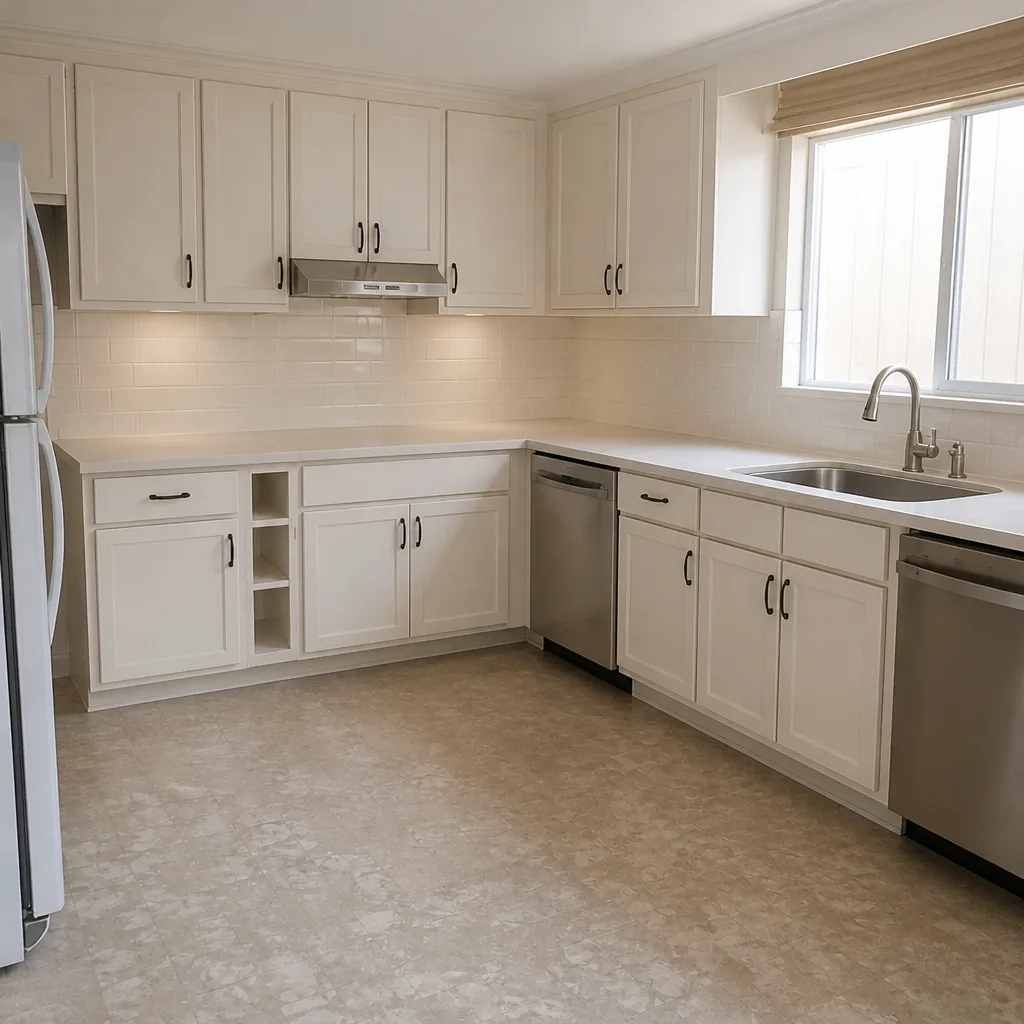 After
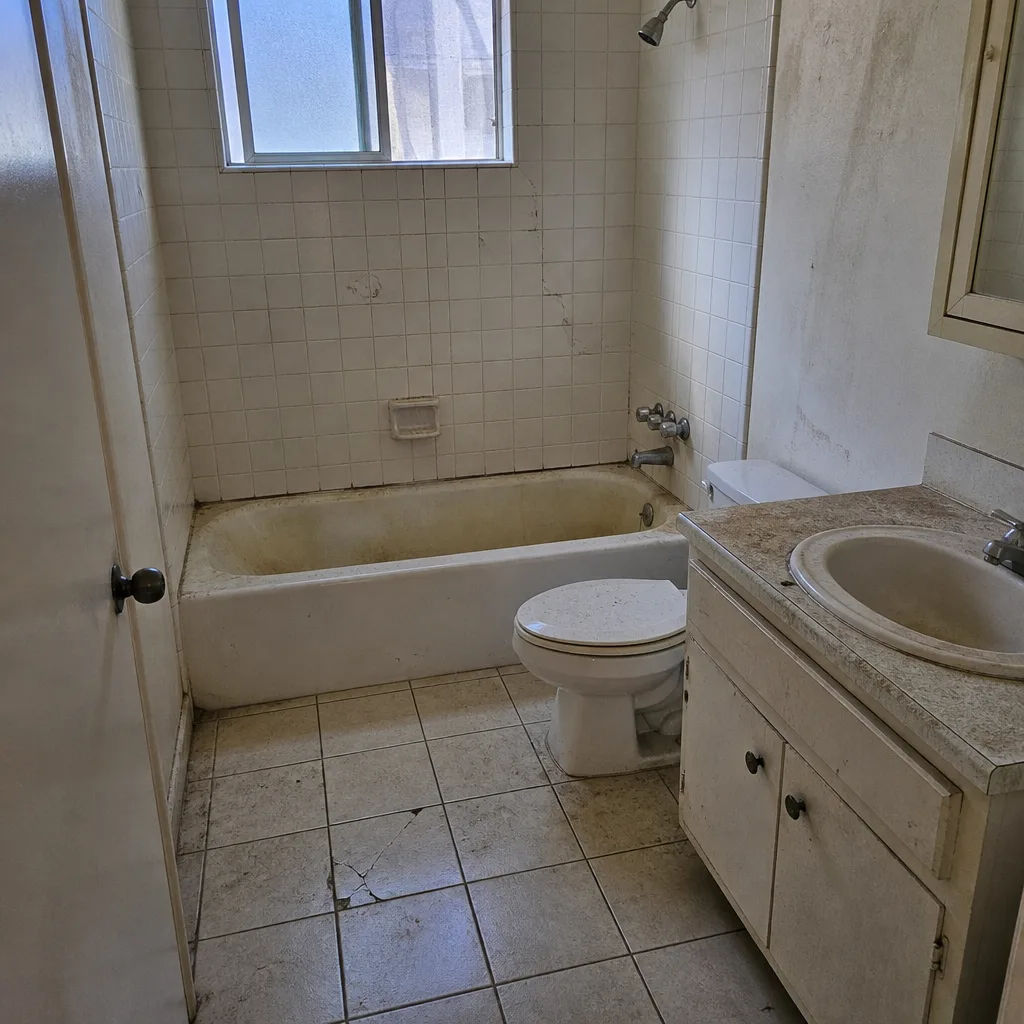 Before
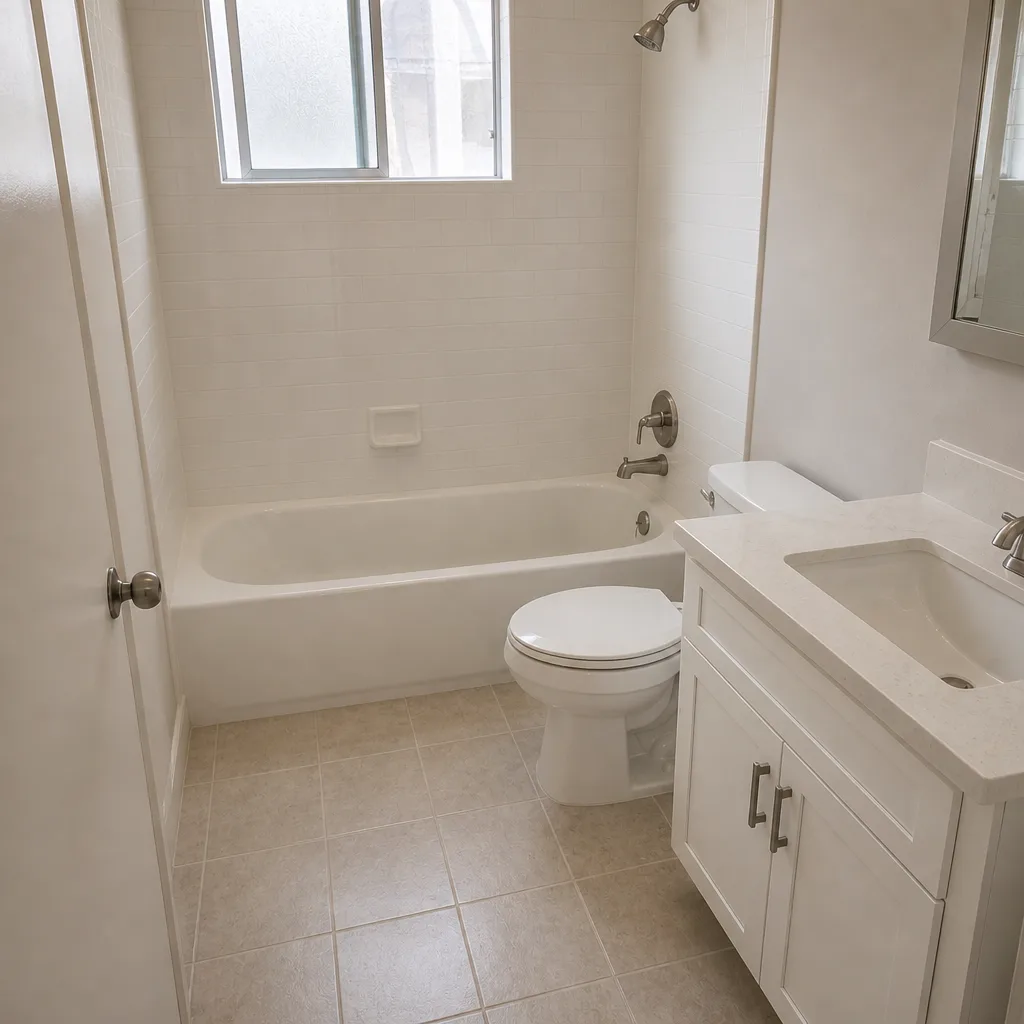 After
When to Call a Professional
Call a professional if any of these are true: a stair-step crack in stucco or masonry, a horizontal foundation crack, a sagging roofline, a bulging exterior wall, water pooling against the foundation after rain, or an interior crack that is accompanied by a sticking door or sloping floor. Also call if you’re unsure. The lines between cosmetic and structural are not always obvious, and an assessment that rules out a structural cause is just as valuable as one that confirms it.
For anything on the exterior – hardscape, fencing, windows, roofing – the cost of a proper assessment is small relative to the cost of a repair done twice. At Construction Torrance, we carry the full scope under one project team, which means a warning sign that crosses from the driveway to the roofline doesn’t need three separate trades to diagnose. Call (844) 560-5501 to schedule a free estimate. We answer 24/7. Fast dispatch from 7am to 7pm, Sunday through Friday. We’re closed Saturday.
Frequently Asked Questions
As a general guideline, a crack under 1/16 inch is often cosmetic, and a crack between 1/16 and 1/8 inch is worth monitoring with a pencil mark. Any crack over 1/8 inch, or any stair-step crack regardless of width, warrants a professional assessment. Call (844) 560-5501 to schedule a free estimate if you’re uncertain which group a crack belongs to.
It can be. A sticking door combined with a matching crack in the wall near the same opening is one of the most reliable interior-to-exterior indicators of movement. Check the exterior wall at the same location for a stucco or masonry crack. If you find one, call (844) 560-5501 for an assessment. We answer 24/7, and dispatch runs from 7am to 7pm, Sunday through Friday.
Persistent standing water in the same location after rain usually means the hardscape base wasn’t compacted properly or the drainage slope was set too shallow. It’s a base issue, not a surface issue. Call (844) 560-5501 for a free estimate if the puddle is lasting more than a day after rain. We’re closed Saturday and open Sunday through Friday, 7am to 7pm.
You can inspect most of your roof from the ground with a walk around the perimeter and a pair of binoculars. Look for a sagging ridge, missing or lifted shingles, granules in the gutters, and staining on the fascia. Roofing work carries real safety risks, and a ground-level assessment is enough to tell you whether a professional review is needed. Call (844) 560-5501 to schedule one.
Structural repairs often require a permit, and the answer depends on the specific repair and the local building department’s current requirements. Rather than guess, ask your city’s building department and ask the contractor you’re working with to confirm. At Construction Torrance, we build to the permit and inspection standards that apply to the work, and we’ll tell you up front what the project needs.
We’re closed Saturday. We answer the phones 24/7, and dispatch runs from 7am to 7pm, Sunday through Friday. Call (844) 560-5501 to schedule a free estimate for a warning-sign assessment. Written estimates are line-item, and the final price is set by the written estimate.
The Bottom Line
The most useful skill a Torrance homeowner can develop is the ability to read a warning sign as either a maintenance note or a structural signal. Cracks under 1/16 inch, puddles that clear within hours, and a single missing shingle belong in the monitor bucket. Stair-step cracks, cracks over 1/8 inch, persistent puddles, and any interior crack paired with a sticking door or sloping floor belong in the schedule bucket. Horizontal foundation cracks, sagging rooflines, bulging walls, and soft framing are stop signals. Photos, pencil marks, and a dated annual walkaround make all of this readable. When you’re unsure which bucket a sign belongs to, get an assessment.
Construction Torrance works across the full scope from the driveway to the roofline, so a warning sign that crosses trades doesn’t need a separate specialist for each piece. Our technicians have up to 13 years of experience. Call (844) 560-5501 for a free estimate. We answer 24/7. Fast dispatch from 7am to 7pm, Sunday through Friday. We’re closed Saturday. For the parent company overview, see Construction Torrance.
Written by the team at Construction Torrance.