
Last updated November 17, 2026
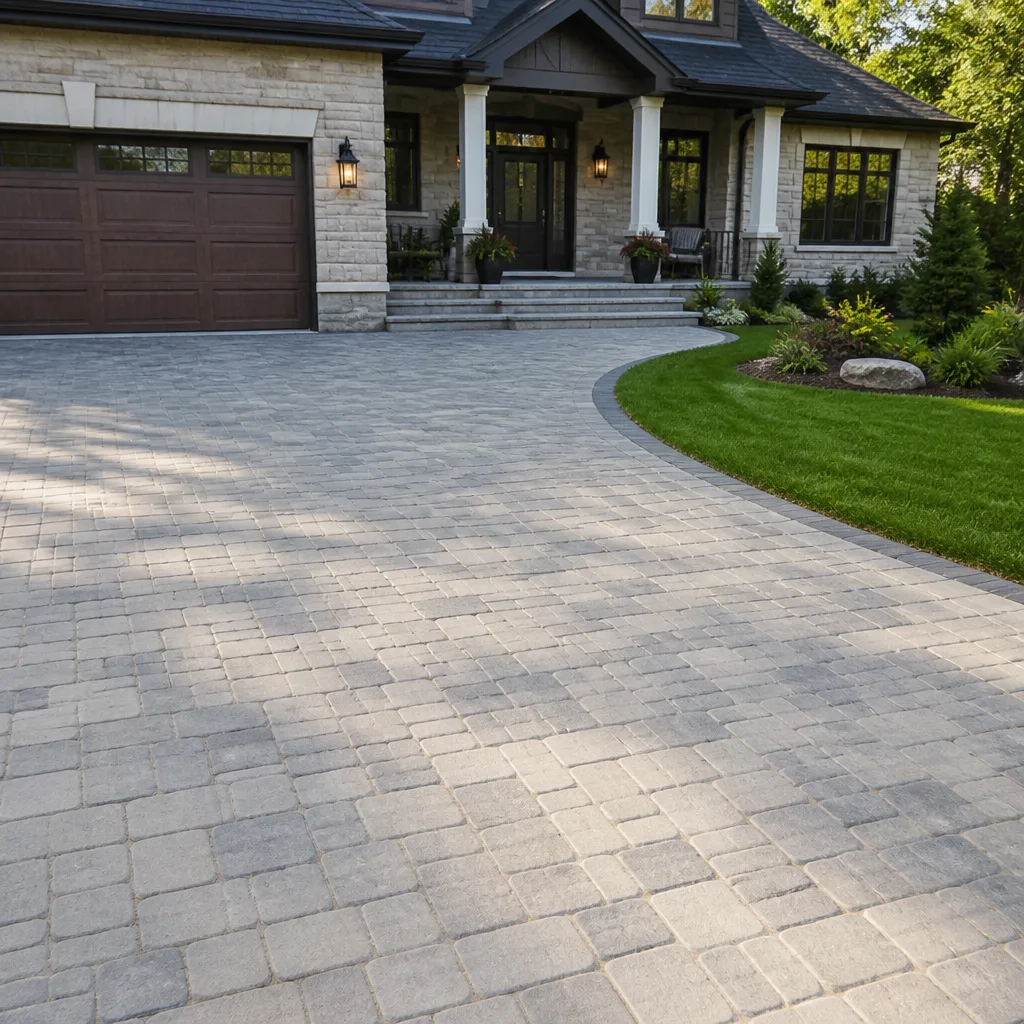 Driveway & pavers
 Kitchen remodeling
 Bathroom remodeling
 Home additions & ADU
 Roofing
 Windows & doors
 Fence
Free written scope consultation - allowances, timeline, and change-order rules on paper before a single trade is scheduled
Driveway & Pavers Troubleshooting in Torrance: Common Problems and How to Fix Them
A sunken paver section after a wet winter isn’t a drainage problem. It’s almost always a base compaction problem that the drainage is just revealing. That distinction matters more than any single repair technique, because fixing only the drainage means you’ll be back in the same spot within a year or two, tearing up the same pavers and paying for the same excavation twice. In our experience, most driveway and paver failures in Torrance trace back to one of three installation shortcuts rather than material failure. This guide teaches you to diagnose before you prescribe: how to tell surface settling from sub-base failure, what different cracking patterns mean, when a stain is cosmetic and when it’s a warning, and how to read a repair proposal so you know whether a contractor is solving your problem or patching over it.
Quick Answer
Most driveway and paver problems in Torrance come from three installation shortcuts: an under-compacted sub-base, missing or undersized drainage, and joint sand that was never properly stabilized. Surface settling can often be re-leveled; a failed sub-base needs excavation and rebuild. The way to tell them apart is a simple visual inspection sequence that looks at crack geometry, joint erosion, and whether the low spots return in the same place after rain.
Styles & brands we work with
- Kitchen remodeling
- Bathroom remodeling
- Home additions & ADU
- Roofing
- Windows & doors
- Driveway & pavers
- Fence
Table of Contents
- How do you tell surface settling from sub-base failure?
- Why does Torrance’s wet-then-dry cycle eat joint sand?
- What do different paver cracking patterns mean?
- When is a stain cosmetic, and when is it a moisture problem?
- Why does water pool in the same low spot every winter?
- What should a legitimate repair warranty cover?
- Repair or full reset: how do you decide?
How do you tell surface settling from sub-base failure?
Surface settling is a cosmetic or shallow structural issue in the top layer of bedding sand and pavers. Sub-base failure originates below the pavers, in the compacted aggregate layer that carries the load. The two look similar in photos, which is why so many repairs go wrong, but they behave differently underfoot and after rain. Here is the visual inspection sequence we use to separate them.
- Walk the perimeter first, not the center. Edge settling that shows up within a foot of the border usually means the edge restraint moved, not that the whole base collapsed. Center settling that spreads outward points the other way.
- Press down hard on the low pavers with your heel. A paver that rocks or dips under body weight has lost bedding support directly beneath it. A paver that feels solid but sits lower than its neighbors is riding on a base that has settled as a unit.
- Look at the gap between paver and edge restraint. If pavers have migrated toward the driveway edge and opened joints on the far side, the restraint is failing and taking the surface with it.
- Check whether the low spot returns after rain. A low spot that reappears in the exact same place after every wet season is a sub-base issue. A one-time dip that stays put is likely a bedding sand problem.
- Measure the drop. A dip under half an inch across several pavers is usually cosmetic. A dip deeper than that, or one that includes a slope change, is a base signal.
Sub-base failure in Torrance comes up often in older driveways that were installed before current compaction standards were widely followed, especially on sloping lots where water load is heavier. If the diagnosis is sub-base, no amount of re-leveling or polymeric sand will hold it. The fix is excavation down to the failed layer, re-compaction, and reinstallation of the bedding and pavers above.
Why does Torrance’s wet-then-dry cycle eat joint sand?
Joint sand erosion in Torrance isn’t caused by rain alone, it’s caused by the way water moves through joints repeatedly as seasons shift from wet to dry and back. When the joints stay wet, the sand softens. When they dry out, the sand shrinks and loosens. A few cycles of that and the sand is sitting on top of the driveway instead of in the joints. Once it’s gone, pavers shift, water gets under the surface, and the base starts to work.
Regular fine sand is the cheapest joint material and the first to wash out. Polymeric sand is a mix of sand and a binder that hardens when it cures, and it holds up substantially better in this climate. Not all polymeric sand is equal, though. What to look for:
- Proper cure time before rain or irrigation. If the sand wasn’t given a full cure window, the binder never set and the joint is back to loose sand performance within one season.
- Joint depth prep before install. Polymeric sand works when the joint is at least half full and dry. Applied to a wet, shallow joint, it fails early.
- Correct width rating. Wide joints and small joints need different polymer formulations. A one-size bag used everywhere is a shortcut you’ll pay for.
- Compatibility with the paver face. Some polymeric sands leave haze on certain textured or tumbled faces if excess isn’t swept correctly before wetting.
Hardscape systems from Belgard, Techo-Bloc and Unilock are engineered around specific joint profiles and stabilizer systems. When we spec a paver for a Torrance driveway through our driveway & pavers service, the joint material and stabilization method matter as much as the surface. If your joints are open and the sand is gone, the fix is a full re-sand with the right product, not a bag of generic sand from a big-box store.
What do different paver cracking patterns mean?
Cracked pavers aren’t a single problem. The pattern tells you what’s happening underneath, and each pattern needs a different repair. Vehicle load cracking looks nothing like tree root intrusion, and treating one like the other wastes money.
Vehicle load damage
Cracks from vehicle load usually appear in the wheel path lanes, especially where the heaviest axle weight lands. You’ll see hairline cracks that run across a full paver, sometimes several pavers in a row along the same line. This often means the sub-base didn’t compact fully under the heaviest load zone, or the pavers themselves were too thin for the application. The fix is excavation and rebuild in the affected lanes, with heavier-duty base and thicker pavers in the traffic areas.
Soil movement
Soil movement cracks are more scattered. They show up in multiple directions, often with the pavers showing lipage (height differences between adjacent pavers) at the same time. In Torrance, this pattern is often tied to expansive clay soils that swell during wet periods and shrink when dry, and it’s more common on driveways that were installed without a deep enough base to buffer soil movement. Repair can be localized if it’s caught early; if lipage is widespread, a full reset is more cost-effective than chasing cracks one at a time.
Tree root intrusion
Tree root cracks are the easiest to misdiagnose, because they often look like fine surface cracks near a landscaped border. The giveaway is location. Roots lift pavers from underneath, so you’ll see cracks near trees, often with an upward bulge, and you’ll see the pattern widen over time. Cutting pavers to accommodate the root or re-leveling over it only buys you one season. The proper fix is either root barrier installation, or relocating the affected surface section.
We’ve seen a lot of these diagnostic differences with paver systems from Tremron and Cambridge as well as the brands above, because their engineered base spec makes the underlying cause easier to trace when a repair is done correctly. If you’re not sure which pattern matches yours, take clear photos of the cracks and the full driveway from a few angles, then call a contractor who can inspect in person.
When is a stain cosmetic, and when is it a moisture problem?
A stain that stays on the surface is cosmetic and often cleanable. Efflorescence, that white powdery or chalky film on pavers, is different. It’s mineral salts that have migrated up through the paver as moisture evaporates out of it. A light efflorescence bloom in the first year is normal for a new install and usually washes away. Efflorescence that keeps coming back in the same area, season after season, is a signal that water is getting into the base and pushing up through those specific pavers.
To tell them apart, clean the area with a paver-safe cleaner and watch how it behaves over the next several weeks.
- Cosmetic stain: organic matter, rust, oil, or tannins from leaves and trees. Cleans up and stays clean with regular maintenance.
- First-year efflorescence: fades over the first several months as the paver finishes curing.
- Recurring efflorescence: the same white bloom reappears after wet weather in the same spots, often with joint sand loss in the area. This is a moisture migration problem. The paver is doing its job; water underneath it is the issue.
Recurring efflorescence in a Torrance driveway usually points to one of three sources: trapped water under the pavers because the slope isn’t draining properly, an edge that’s letting rain sheet under the surface, or a joint that’s been starved of sand for long enough that the base has started holding moisture. Chasing it with cleaners alone means the moisture source is never found.
Why does water pool in the same low spot every winter?
Water pooling in the same spot every wet season means the drainage and the grade are out of agreement. Either the slope built into the pavers isn’t carrying water to where the drain or the street edge should be, or the drain itself is undersized, or the sub-base has settled and created a bowl the water has to sit in until it evaporates or infiltrates.
A proper Torrance paver driveway has at least a subtle pitch toward the street or a drain, usually in the range of a small-percentage slope rather than a flat surface. When we inspect a recurring low spot, we check three things in order:
- Grade check. Is the surface pitched in the right direction, and does it hold that pitch across the whole panel or just fail in one section?
- Drainage path check. Does water have a clear path to the drain or street, or does it have to cross a joint, a border, or a raised section to get there?
- Base check. Has the finished surface dropped below the intended slope because the base compacted unevenly?
If it’s grade, the fix is localized re-laying in the affected panel. If it’s drainage capacity, the fix is adding or upsizing the drain line and re-cutting the path. If it’s base, the pit under the low spot has to be excavated and rebuilt. Torrance’s wet winters make all three more obvious, but by the time you see the low spot in July, the underlying cause has usually been there for a season or more.
What should a legitimate repair warranty cover?
A legitimate repair warranty covers workmanship on the repair area for a defined period, and material defects through the manufacturer’s own warranty. If the failure comes back in the repaired area, the warranty should cover re-opening and re-fixing that area without a new labor charge. If the pavers themselves crack or fail, that runs through the paver manufacturer, not the installer, and the proposal should say so clearly.
What to look for in the writing:
- Defined repair scope. Does the proposal state exactly how many pavers, how much base, and how much edge restraint the repair includes? Vague scope is the most common signal that the proposal is a patch.
- Numbered warranty period. A real warranty states the labor period in writing, along with any exclusions for tree roots, vehicle overload, or damage from outside sources.
- Explicit statement of the underlying cause. A proposal that fixes the symptom without naming the cause (base compaction, drainage, edge restraint) is likely to fail again.
- Material spec by name. A repair that doesn’t name the joint sand brand or the paver match is a proposal where the outcome depends on what’s available on the day.
- Clear “we are not doing” list. A good proposal tells you what it doesn’t cover, so you can decide whether to expand the scope before work begins.
What a patch typically looks like in writing: the repair is quoted as “level low area” with no cause, no base depth, and no mention of the edge restraint or joint sand. If that’s what you’re reading, ask for the diagnosis before you sign.
Repair or full reset: how do you decide?
Repair makes sense when the problem is localized to a defined area, the underlying base in that area is intact, and the rest of the driveway is holding its grade and pitch. A full reset is the better call when the failures are spread out, sub-base compaction failed under the traffic lanes, or the drainage system needs to be rebuilt anyway. The cost of a repair that fails and has to be redone usually exceeds the cost of doing the right scope the first time.
Three rules of thumb from our work on Torrance driveways:
- Localized dip, contained damage, one area: repair.
- Two or more separate low areas, or damage spread across the whole driveway: full reset is usually more cost-effective over the first several years.
- Any recurring efflorescence or drainage pooling affecting more than one panel: full reset with drainage redesign.
Full resets also give you the chance to upgrade the underlying spec, which is where most failures actually start. If the original install skipped proper compaction or used the minimum base depth, the reset is the moment to correct that. If the driveway install is part of a larger project, such as coordinating with a fence installation to fix a shared border, one contractor from the driveway to the roofline makes more sense than hiring three separate specialists and hoping the crews coordinate.
Common Mistakes to Avoid
- Re-leveling without diagnosing the base. Re-laying pavers over a failed base looks fixed for a season, then the low spot returns. Every repair should start with a visual inspection of the sub-base condition, not just the surface height.
- Using generic joint sand instead of a proper polymeric product. The bag of sand from a big-box store is cheap and fails first. Specifying the joint sand by brand, along with the cure window, is what makes a re-sand last through Torrance’s wet-then-dry seasons.
- Cleaning efflorescence without finding the moisture source. A cleaner will strip the surface white bloom, but if the moisture is coming from under the pavers, the bloom is back within a season. Treat the source, not the symptom.
- Skipping the edge restraint inspection. A lot of “settled pavers” turn out to be pavers migrating toward a failed edge. If the restraint isn’t replaced or re-anchored, the joint gaps reopen.
- Accepting a proposal that quotes a price but not a scope. In a market where legitimate proposals list base depth, paver spec, joint sand, and warranty terms, a one-line quote is a signal the work is being patched, not solved.
- Cutting pavers to accommodate tree roots. The root keeps growing. Cutting buys a season or two and then the same area lifts again. Root barrier or surface relocation is the durable fix.
- Replacing the whole driveway when a proper repair would hold. A well-scoped repair on a localized failure is not the cheap option, it’s the correct one. Full reset is right when the diagnosis says sub-base, not because the surface looks tired.
See the difference
 Before
 After
 Before
 After
 Before
 After
When to Call a Professional
Call a professional when the diagnosis isn’t clear, when the low spot has come back after a previous repair, or when the paver damage extends across more than one panel. Base failures, drainage redesigns, and edge restraint work all involve excavation and compaction, and getting the compaction wrong the second time is more expensive than getting it right the first time. Recurring efflorescence, tree root intrusion, and widespread lipage all point to underlying issues that a surface repair can’t fix. Construction Torrance offers free estimates in Torrance. Call (844) 560-5501 to schedule an inspection. We answer 24/7. Fast dispatch from 7am to 7pm, Sunday through Friday. Our technicians have up to 13 years of experience, and we spec hardscape systems from Belgard, Techo-Bloc, and Unilock, so the repair matches the material that’s already there.
Frequently Asked Questions
Most localized paver repairs in Torrance fall in a range that depends on the repair scope: how many pavers, whether base excavation is needed, and whether joint sand is being replaced. A re-level of a small settled area is a different job from an excavation and rebuild under the traffic lanes. Call (844) 560-5501 for a free written estimate that sets the exact price before work starts.
It depends on what the inspection shows. A shallow dip that’s confined to a small area and doesn’t return after rain can often be re-leveled. A dip that comes back in the same spot every wet season, or that shows lipage at the edges, usually points to a sub-base failure that needs excavation, re-compaction, and rebuild. The visual inspection sequence above is the way to tell which one you’re dealing with.
That’s efflorescence, mineral salts migrating up through the paver as moisture evaporates out. A light bloom in the first year is normal and washes away. White marks that keep returning in the same area are a moisture migration signal, meaning water is getting under the pavers and needs a drainage or joint fix, not just a cleaning.
It depends on the joint sand product used and how the driveway handles the wet season. Polymeric sand typically holds up much longer than regular fine sand, but it does need to be replaced when joints start showing erosion, when the pavers begin to shift, or when the sand level has dropped below the joint surface. Inspect after each rainy season and re-sand when the joints look starved.
Paver installation and repair don’t always require a permit, but Torrance requirements depend on the scope, especially when the work involves changing drainage or grading. The written estimate and project plan should state clearly whether permits are being pulled, and if they aren’t, why. Ask up front so there’s no surprise later.
It shouldn’t, when the estimate is based on a proper inspection. A change order should be necessary only when the crew opens the base and finds damage that wasn’t visible from above, such as a deeper base failure or an unlocated drainage issue. When that happens, the change order should be written and approved before the additional work continues. Call (844) 560-5501 to schedule a free inspection and get a fixed written estimate.
The Bottom Line
Most driveway and paver problems in Torrance aren’t material failures. They’re installation shortcuts revealing themselves, and the fix is only as durable as the diagnosis behind it. Surface settling is a re-level. A returning low spot, widespread lipage, or recurring efflorescence is a base, drainage, or joint issue that needs proper excavation and rebuild. Read the repair proposal carefully: the ones that name the cause, the base spec, the joint product, and the warranty period are solving the problem. The ones that quote a price for “leveling the low area” are patching it. When the diagnosis isn’t clear, get an inspection before you get a bid. Call (844) 560-5501 for a free estimate in Torrance. We answer 24/7. Fast dispatch from 7am to 7pm, Sunday through Friday. Your project, one point of contact, whether it’s a paver repair, a coordinated exterior scope with home additions & ADU work, or a full property plan handled by Construction Torrance from the driveway to the roofline.
Written by the team at Construction Torrance.